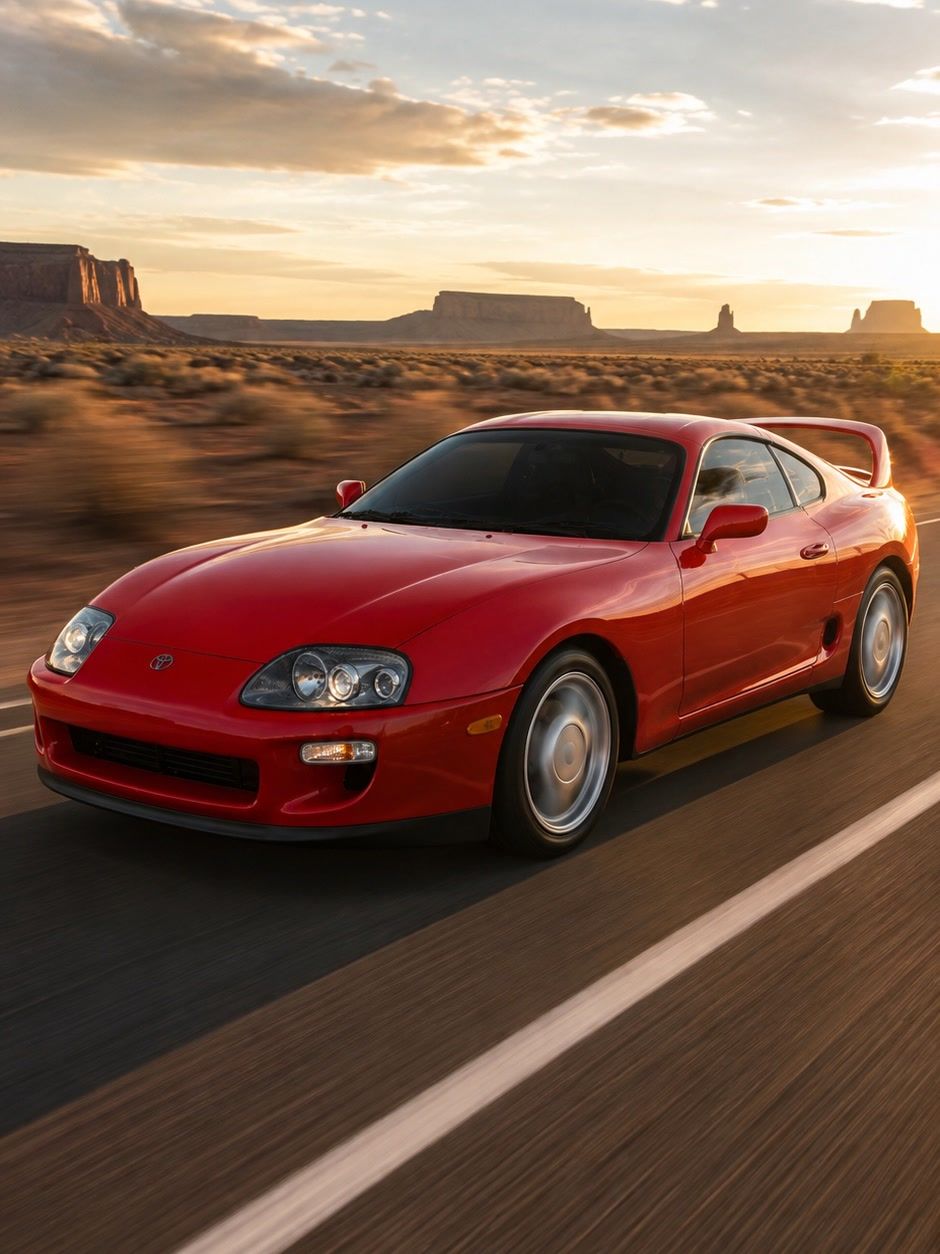
Why Your Car Footage Looks Like a Phone Clip
It's almost never the camera. It's three settings — shutter, ND, aperture — and two techniques. Fix those and a used mirrorless from 2019 shoots footage people ask about.
1. The 180° Shutter Rule
Set your shutter to roughly double your frame rate: 24fps → 1/50, 30fps → 1/60, 60fps slow-mo → 1/120.
This is the single biggest "why does mine look off" fix. Auto mode picks fast shutters (1/500+) that freeze the wheel spokes and make panning footage stutter. At 1/50, wheels blur into discs and the road streaks — motion looks like motion.
DEMO: SAME WHEEL, SAME SPEED, TWO SHUTTERS
Left, 1/500: spokes frozen every frame, so the motion strobes. Right, 1/50: the smear is what your eye reads as speed.
2. ND Filters — the Daylight Tax
Hold 1/50 in full sun and you're 4–6 stops overexposed with nowhere to go. That's what an ND filter is for: sunglasses for the lens, so you keep the cinematic shutter without stopping down to a flat, diffraction-soft f/16.
Buy one variable ND in your lens' filter size before any other accessory. Golden hour needs little or none — one more reason every car ad is shot at golden hour.
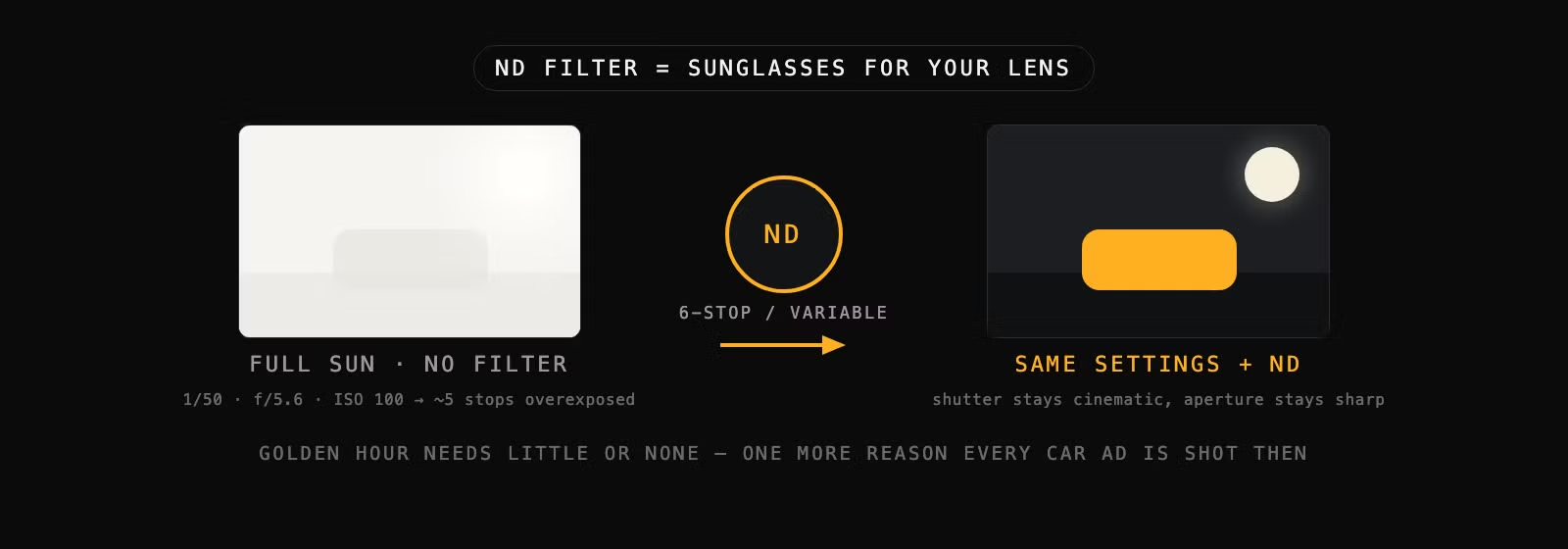
ND = KEEP THE SHUTTER, LOSE THE SUN
3. Aperture: Two Numbers, Not a Dial
- f/2.8–f/4 — static hero shots and details, background melts.
- f/5.6–f/8 — anything moving: rolling shots, tracking, fly-bys. The whole car stays sharp while it travels through your frame.
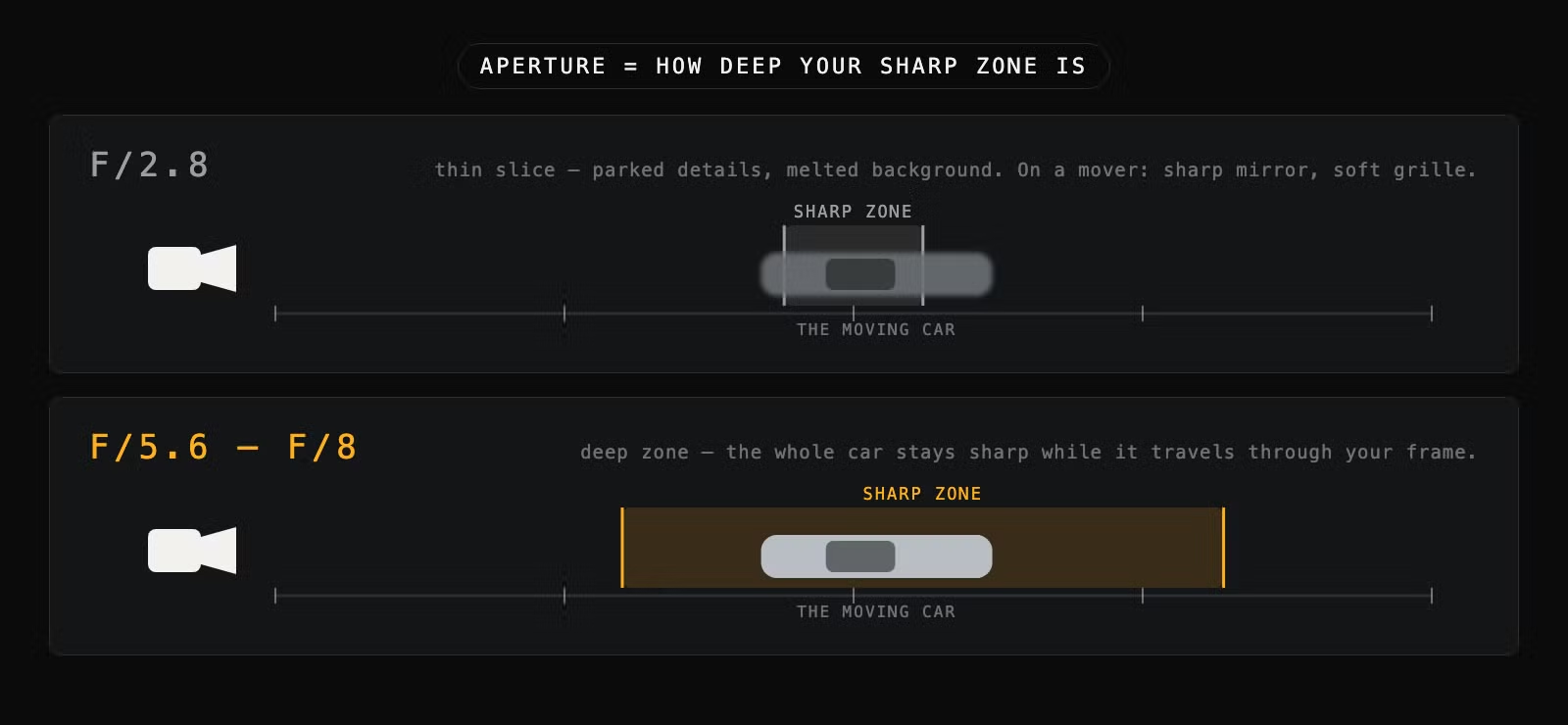
APERTURE = DEPTH OF THE SHARP ZONE
Wide open, the sharp slice is thinner than the car. Stopped down, the whole car can travel through it.
4. The Rolling Shot (Photo Version)
Shutter priority at 1/40–1/60, continuous AF, burst, stabilization on, chase car at matched speed, 20–40 mph. Pan with the car and accept a brutal keeper rate — pros throw away most of the card too. Full breakdown in the rolling shot guide.
5. The Fly-By
Low at the roadside, pre-focus the patch of tarmac where the car will pass, frame wide, pan smoothly through the pass and keep panning after it's gone. One car, one driver, one take every pass — this is the beginner-friendliest real shot there is.
DEMO: THE FLY-BY, FROM ABOVE
The camera never moves from its spot — it only rotates. The follow-through after the car exits is the part beginners cut too early.
Or Skip the Chase Car Entirely
Everything above needs an empty road, a second driver, an ND filter and a lot of deleted takes. The other way is one parked photo:
 STOCK
STOCK BUILT
BUILTVIDEO: COMMERCIAL
One garage photo in — a scored, voiced, four-shot commercial out.
Every rule above, applied at once — shutter, movement, light and the 180° line, in a clip nobody drove a chase car for:
VIDEO: COMMERCIAL · 100 CR
The four-shot grammar in motion. Sound on.
Commercial
Wide opener, drone shot, hero close-up, fly-by — your exact car, scored and voiced. 12 seconds, about five dollars.